Tutoom vs. Zoom: Why Education Needs More Than a Video Conferencing Platform
For years, education has adopted technology built for another world. Schools and universities use productivity suites designed for businesses, meeting platforms built for workplace collaboration, and document ecosystems built around office work. These tools are powerful, but they raise a fundamental question: should the future of education depend on technology that was never designed around education?
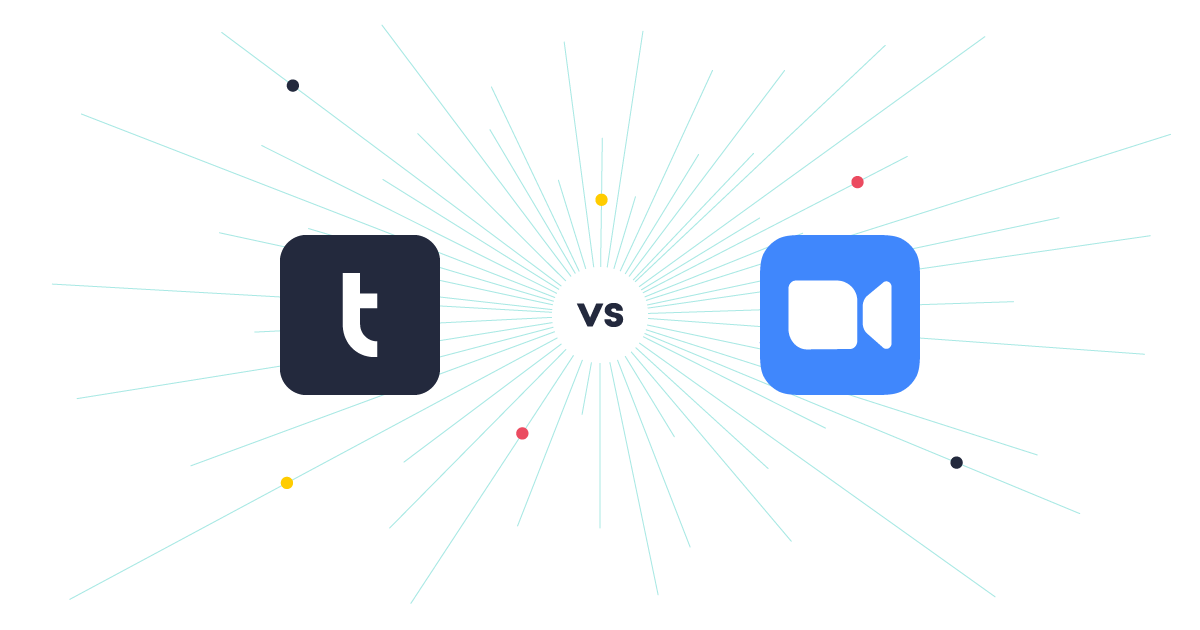
That's where the difference between Tutoom and Zoom becomes more interesting than a simple feature comparison. Zoom is one of the world's leading video communication platforms, Tutoom is taking a different path: building technology infrastructure for education, not adapting a communication tool to fit it.
The content, not the meeting
Zoom's fundamental unit is the meeting: people join, talk, share screens, chat, and leave. That works well for business meetings, webinars, and even some classes. But education isn't built around meetings, it's built around content. The way we create educational content hasn't changed in the last 20 years, teachers still share their screen and show static content.
Education is the foundational pillar of society, it is how we transfer knowledge from one generation to the next, and in an age of AI, it is important to preserve human knowledge among humans.
Tutoom is built around that mission, and we have a big commitment to create the best digital tools to achieve it.
A whiteboard that rebuilds itself
In most video platforms, the whiteboard is just an add-on, a tool bolted onto the meeting. Tutoom was born the other way around, as a whiteboard that lets teachers create and explain content at the same time.
Picture a math teacher working through a problem. As the equation builds and students follow along, the whiteboard saves every stroke, step, and action as data. When a student hits play, the whiteboard rebuilds itself, step by step, exactly as the teacher created it. The result is structured educational content that anyone can access.
That reframes the whiteboard: it's no longer a digital replacement for a physical board, but an interface between humans.
Education needs its own infrastructure
Modern education technology is often stitched together from products built by different companies for different purposes: an LMS from one, video conferencing from another, plus separate tools for storage, whiteboarding, AI, identity, and analytics. It works, but integrating so many systems is painful, and that fragmentation makes it difficult to scale and innovate.
Tutoom's mission is to reverse that. We develop and operate every layer of technology required to run software at a global scale: server infrastructure, real-time media, and whiteboard technology. We believe vertical integration is the key to unlocking new innovation and making it affordable for everyone.
Why build everything from scratch? First, independence. One of Tutoom's goals is to not depend on a third-party provider that could become a competitor. Second, we strongly believe privacy in education is a right, not a feature, and owning our own infrastructure is what lets us guarantee it.
The future is not a video call
Education doesn't need another app that adds more buttons to a video meeting. It needs technology built from the ground up around learning, with the classroom, teacher, and student at the center, instead of forcing people to adapt to tools designed for someone else's needs.
Zoom defined the era of remote communication. Tutoom wants to define the next one: real-time, intelligent, interactive education infrastructure. That's not a feature of some other product, it's the product itself, and it's what we're building.